

DEEP DIVE | Plastic reduction
A ROADMAP TO USE LESS
A 5-step approach to cut plastic and meet sustainability targets
CHALLENGE
Closing critical gaps in plastic reduction
The client set bold PCR targets but was significantly behind, achieving ~7% vs. a 20% goal. This case study focuses on the first key action: Cutting plastic through new formats and consumption models, alongside efforts to improve recycling infrastructure and PCR sourcing in the supply chain.
STEP 1
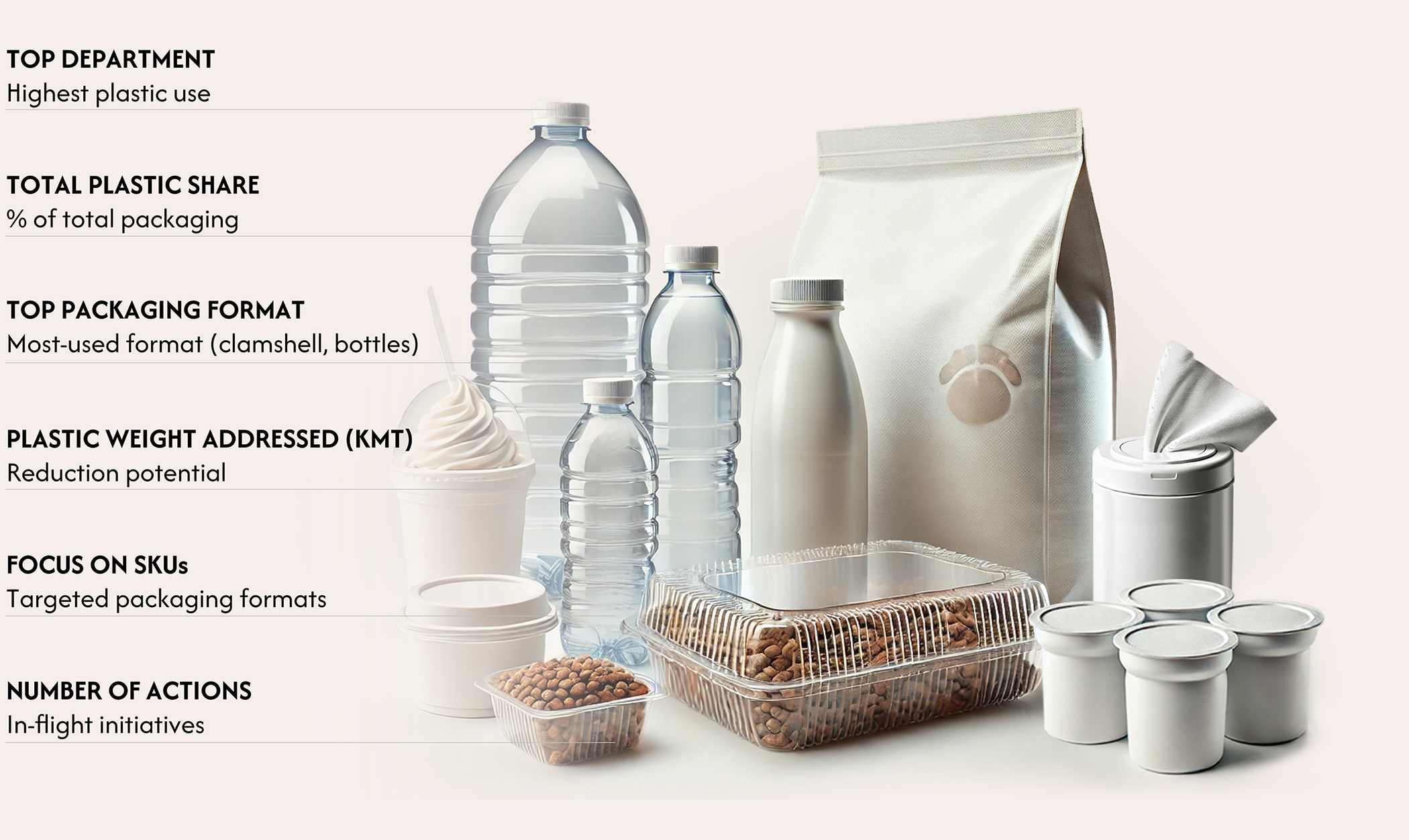
IDENTIFY HIGH-PLASTIC DEPARTMENTS
and select SKUs with difficult-to-mitigate plastics and scalable learnings for broader application.
STEP 2
SELECT ALTERNATIVE PACKAGING
formats to cut plastic through innovative design. Rethinking packaging proved how cross-category inspiration and breakthrough materials reduce plastic. Circular options, like refillables, challenge habits but are essential for cutting waste and building sustainable routines.
Refills that deliver more. Refill systems cut costs by 50% and reduce CO₂ and plastic by 60–70%

Breaking free from plastics. Fiber-based carton with separable films cuts plastic use by 80-90% and halves emissions versus HDPE containers

STEP 3
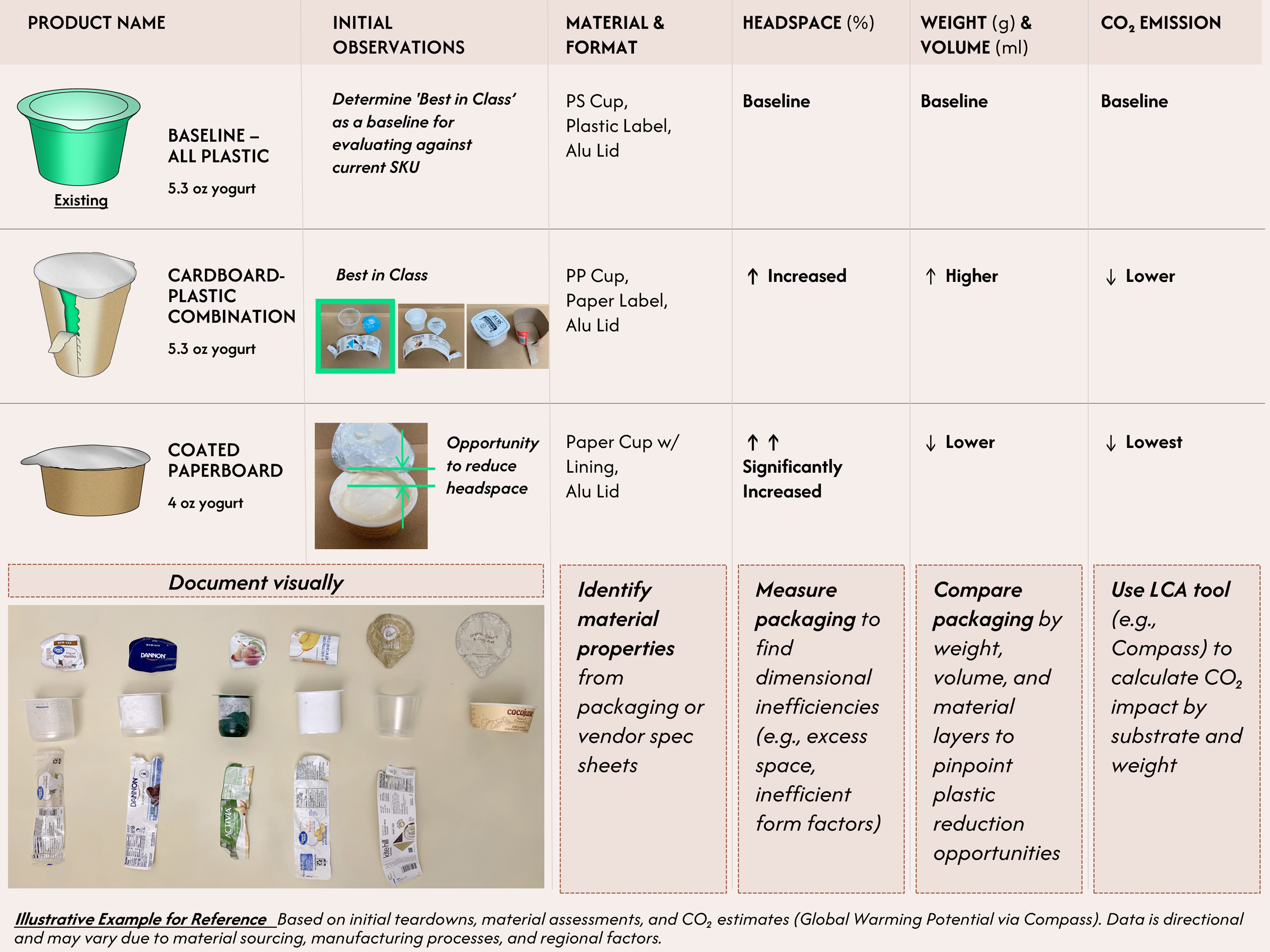
TEAR DOWN SELECTED PACKAGING SKUs
and competitor formats using LCAs to benchmark performance and establish a clear baseline for trade-offs and redesign potential. Track unit cost, CO₂ emissions, and plastic reduction to assess impact.
STEP 4
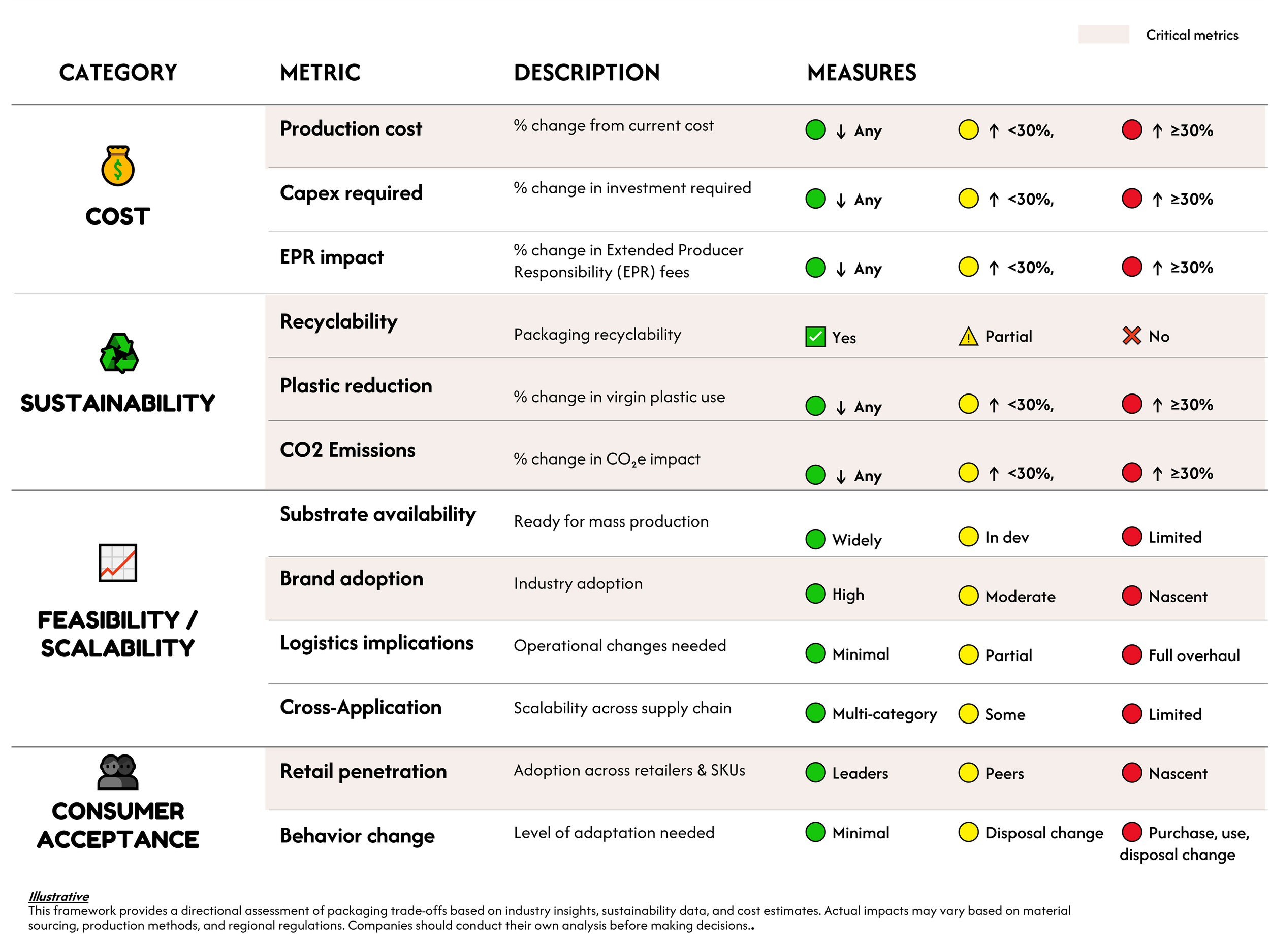
ESTABLISH METRICS TO RANK PACKAGING FORMATS
by evaluating teardown outputs and assessing feasibility across cost, sustainability, scalability, and consumer acceptance. Leverage industry resources, vendor networks, and cross-functional partnerships to develop and align ranking criteria for informed decision-making.
STEP 5
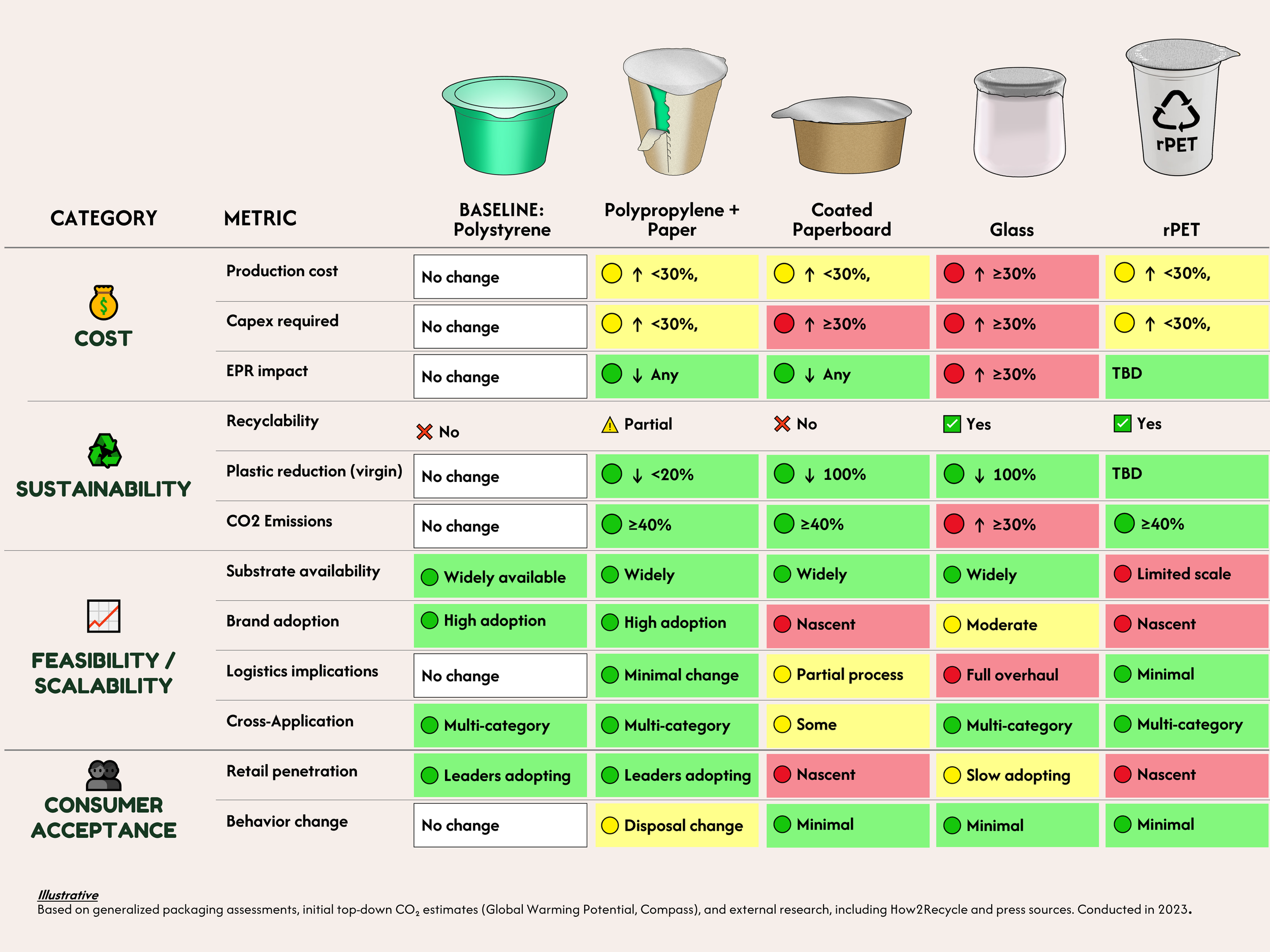
USE SCORECARD TO DRIVE PACKAGING TRANSITIONS
A structured scorecard helps teams evaluate packaging changes by weighing trade-offs, prioritizing key levers, and aligning with a single set of metrics to meet commitments. It balances short-term viability with long-term impact, enabling quick wins while laying the groundwork for future progress.
In 2023, I led a five-week sustainability sprint to accelerate plastic reduction in private brand packaging, collaborating across operations, supply chain, and merchandising to drive strategic insights and scalable solutions.
TEAM
Sustainable Packaging Leadership
Lea Kobeli
Lifecycle Assessment (LCA) and Cost Analysis
Jin Jeng
Business Analyst
Katy Kim
Program Management
William Tarnell
Business Development
Pamela Brown, Steve Hoffman
CREDITS
Designed by McKinsey Design
Media Credits McKinsey Design
This project is presented for portfolio purposes only and is not affiliated with or endorsed by any company. All rights reserved.


Back to Overview

Next: Coffeehouse experience