

DEEP DIVE Illumina | Genome sequencing portfolio
DESIGN DNA
Where Illumina’s design legacy began—defining a distinct brand identity and simplifying complex workflows. Helped position Illumina as the global leader and gold standard in genome sequencing—partnering for over a decade to shape its rise from genomics niche to global dominance.
THE CHALLENGE
Establishing a Best-in-Class genome sequencing experience in a nascent market
As the sequencing market emerged, Illumina needed a standout design for its scanning platform—one that signaled premium brand leadership and streamlined key workflows like sample loading, run monitoring, and issue resolution.
SETTING A DISTINCT BRAND IDENTITY & LEGACY
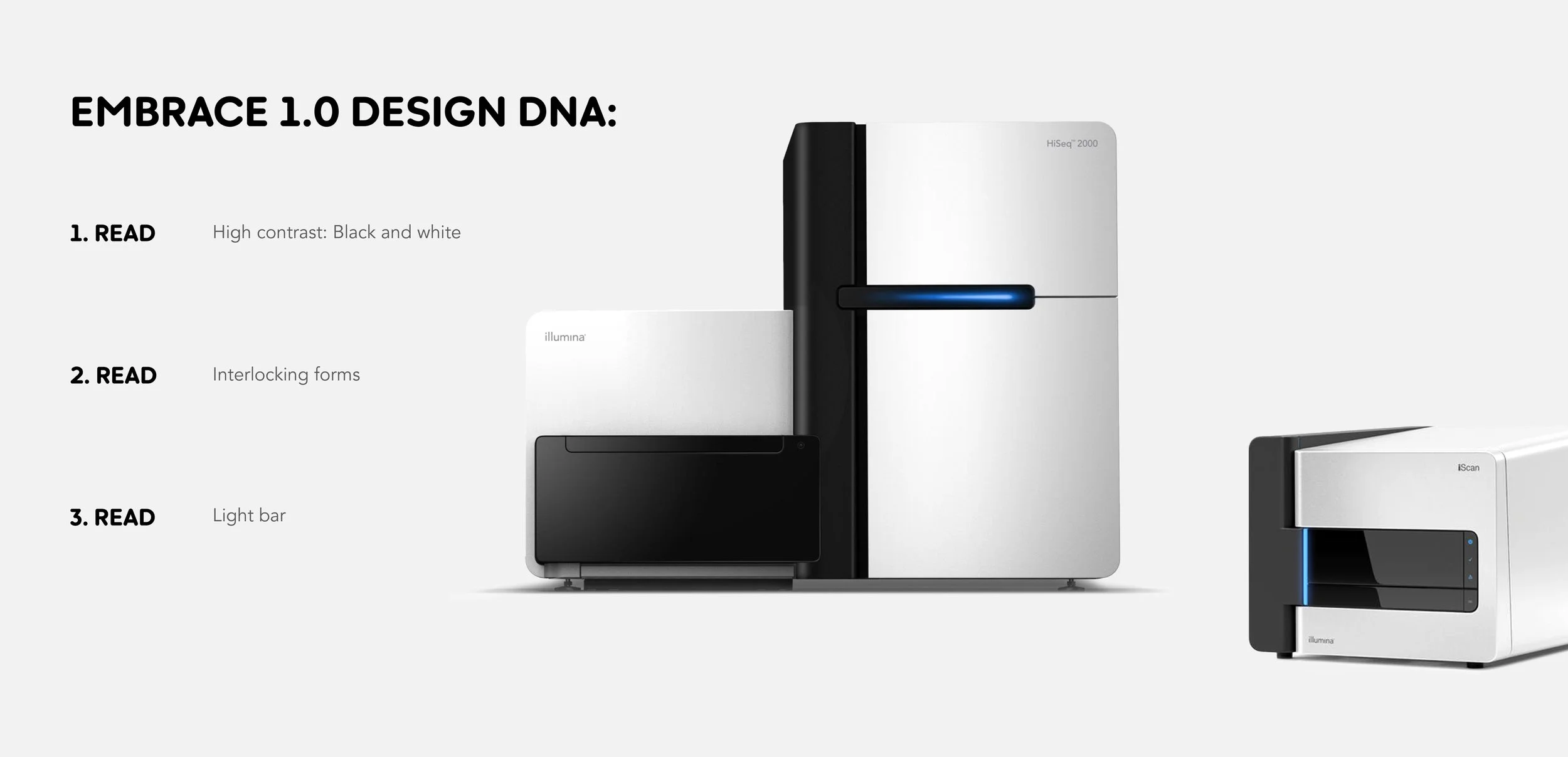
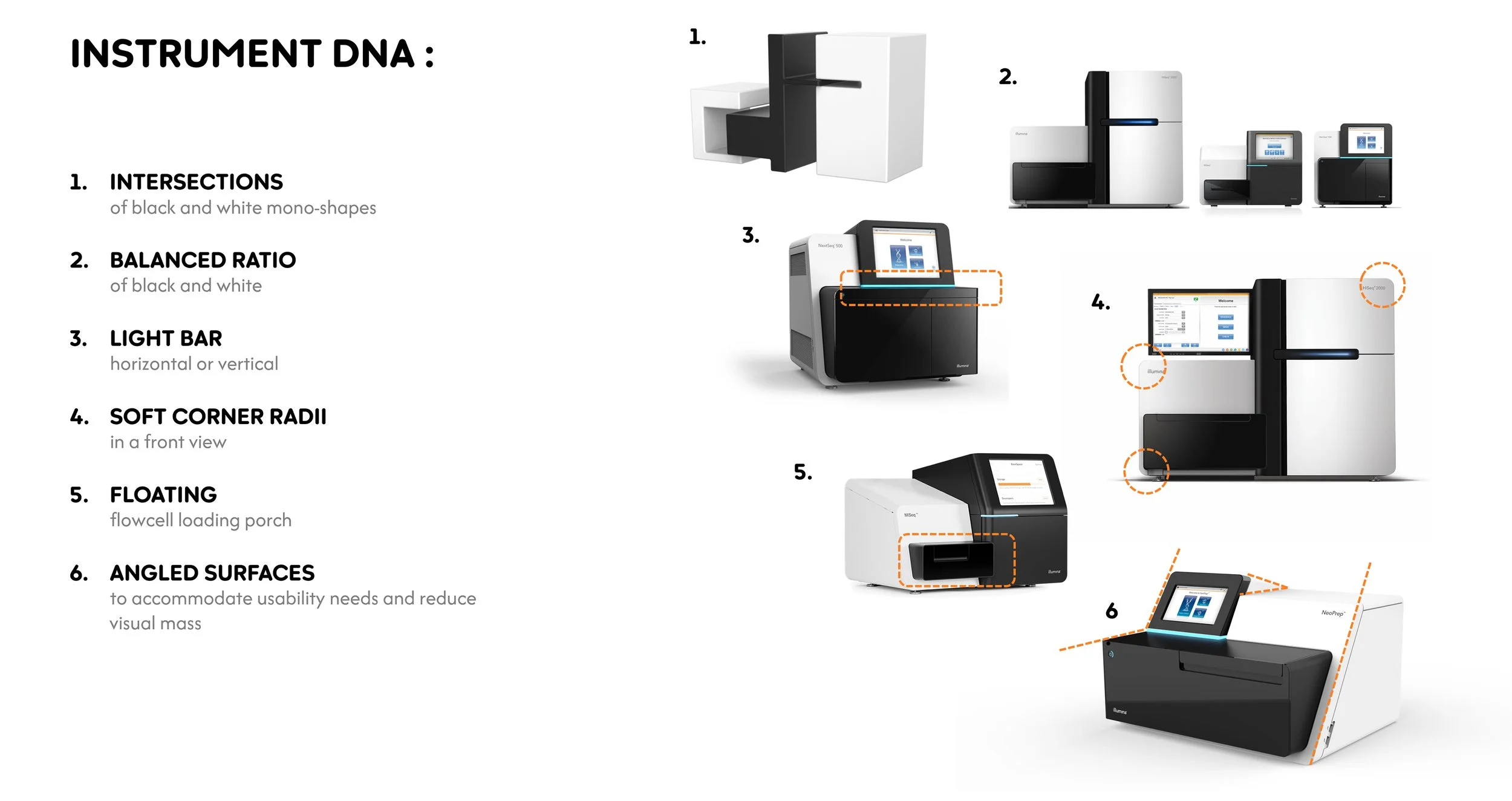
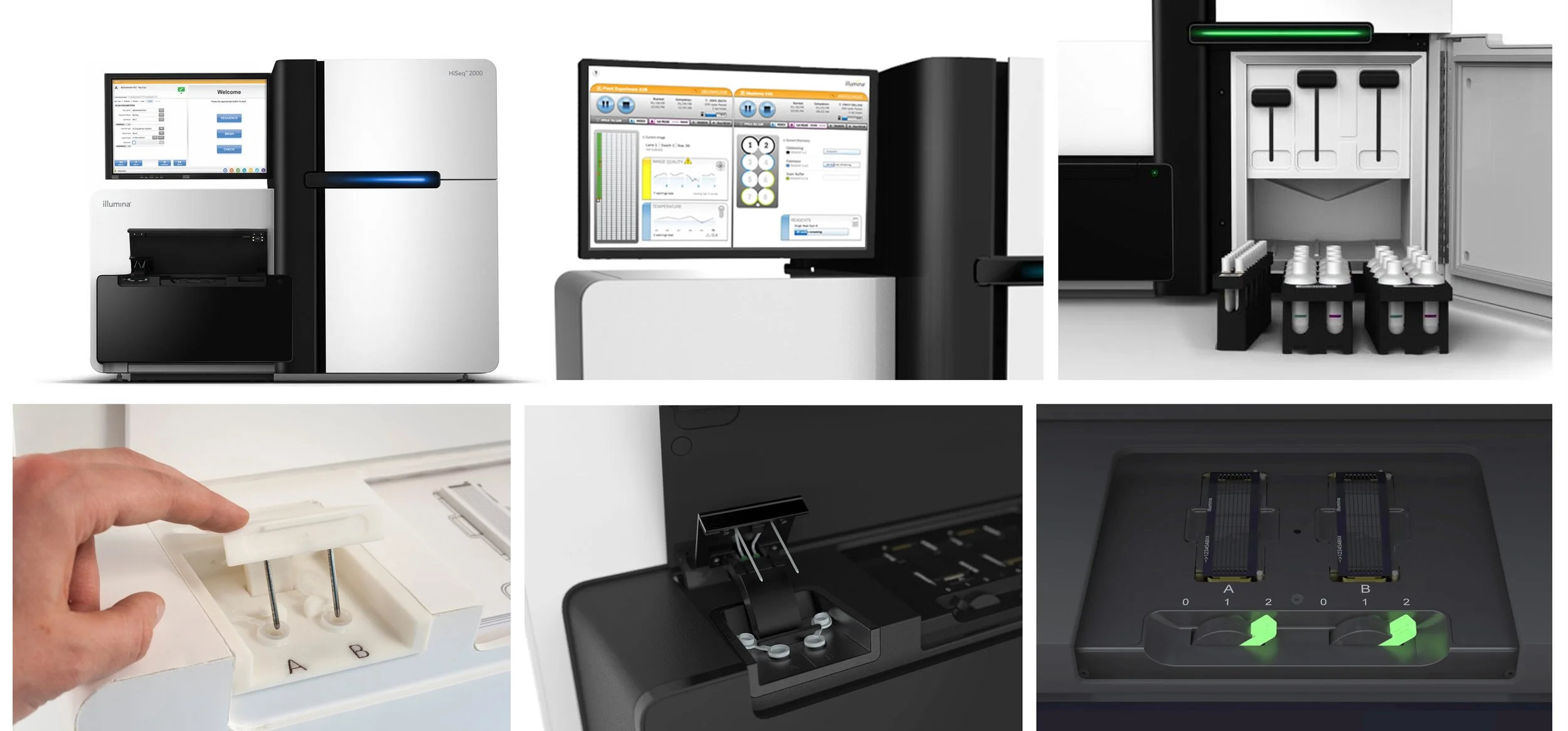
I established Illumina's sequencing design DNA through iScan's signature "EMBRACE" language. Just as Illumina's innovation bridges technology and human DNA, iScan serves as a powerful 3D brand expression—interlocking those distinct elements like puzzle pieces to reveal breakthrough solutions.
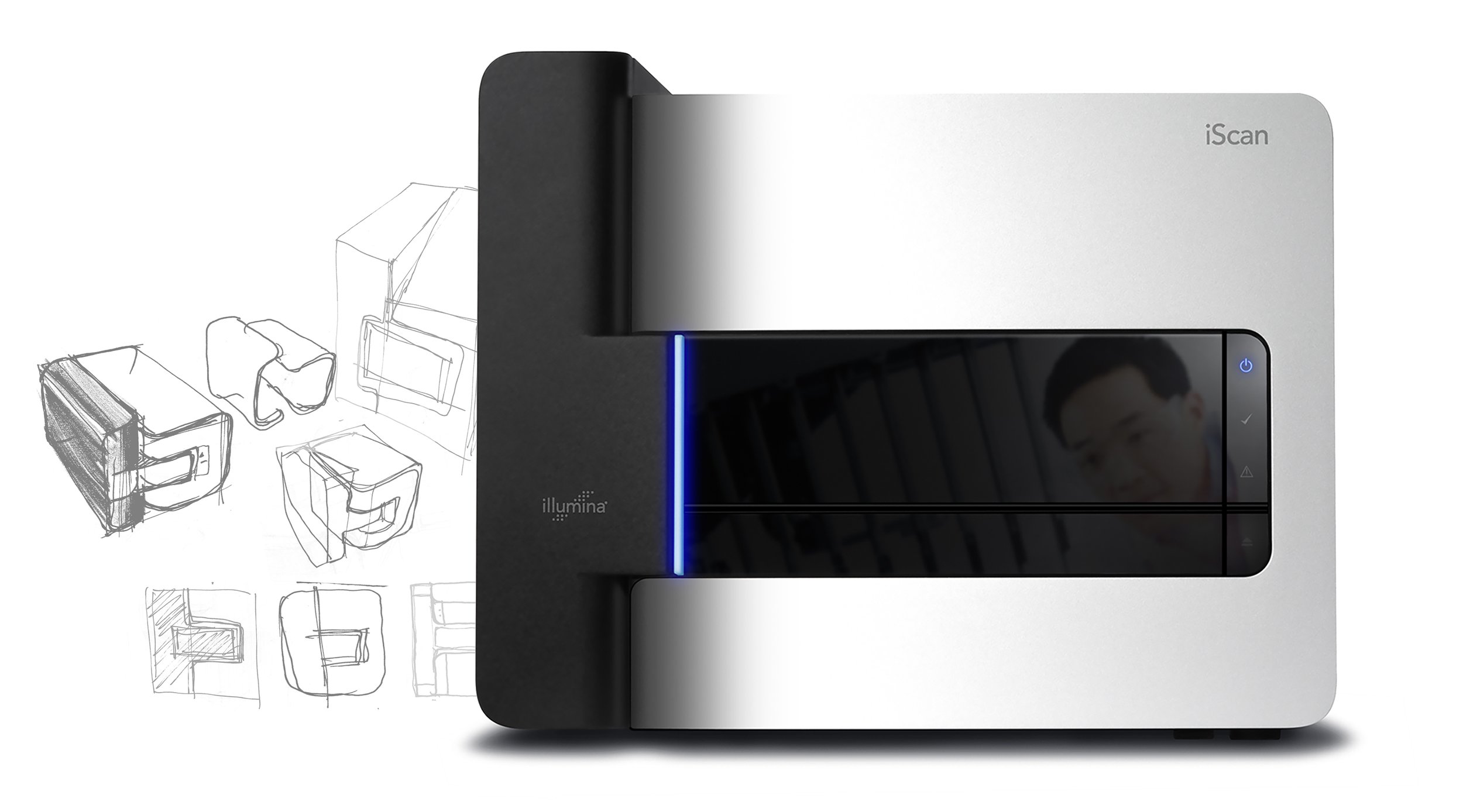
The EMBRACE design language unites opposites: A charcoal black form representing reliable technology, and a generous white structure symbolizing the human element. Like Yin and Yang, they form a harmonious and iconic statement
Designing for scale and disruption
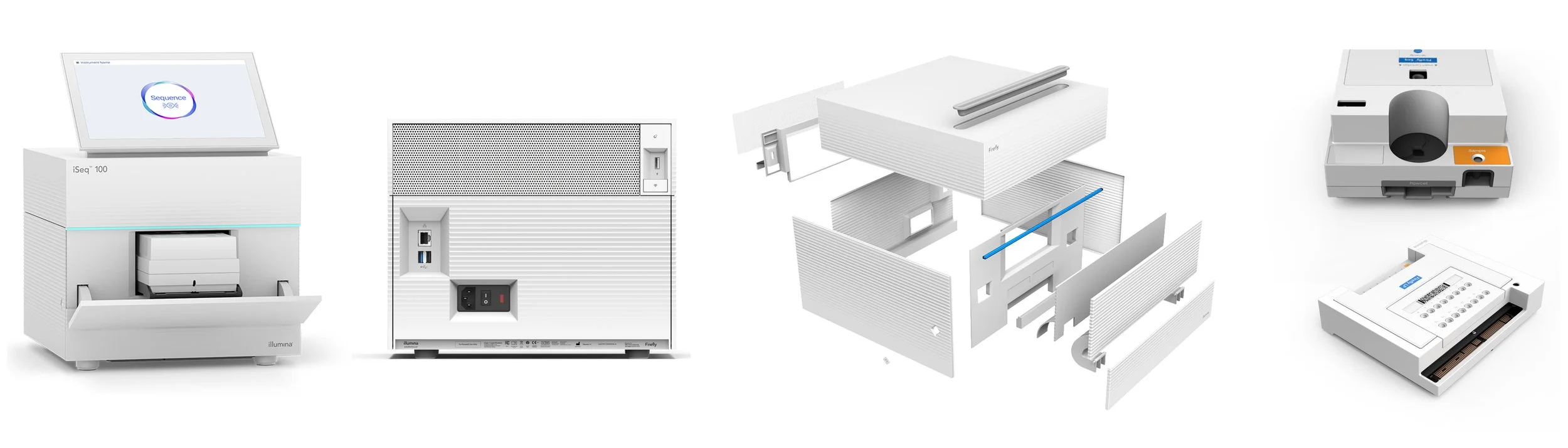
To maintain Illumina’s design leadership, the Embrace 2.0 language evolved to unify radically different instrument formats—from XL genome analyzers to pocket sequencers—by anchoring the design around the core interaction point: The flow cell.
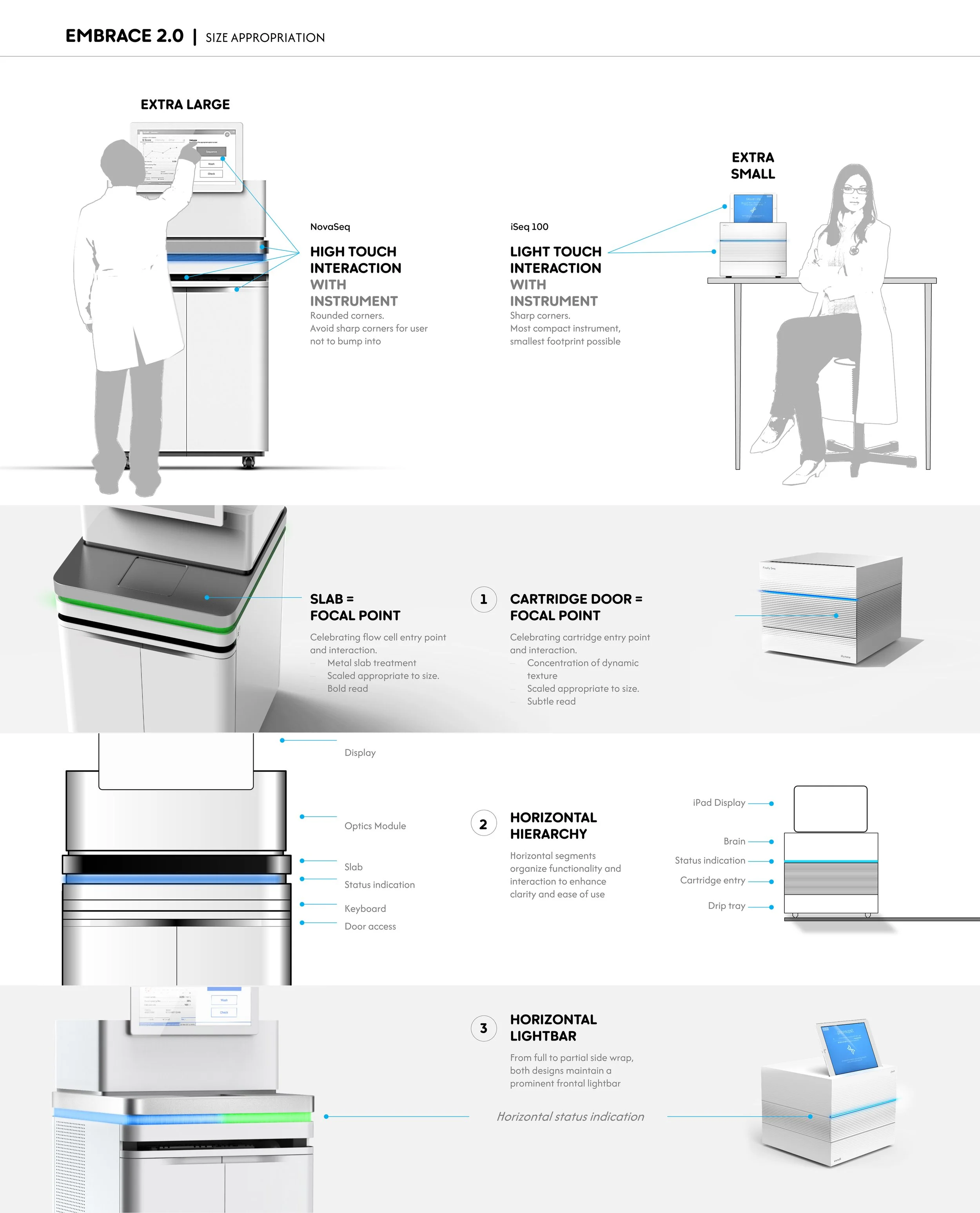
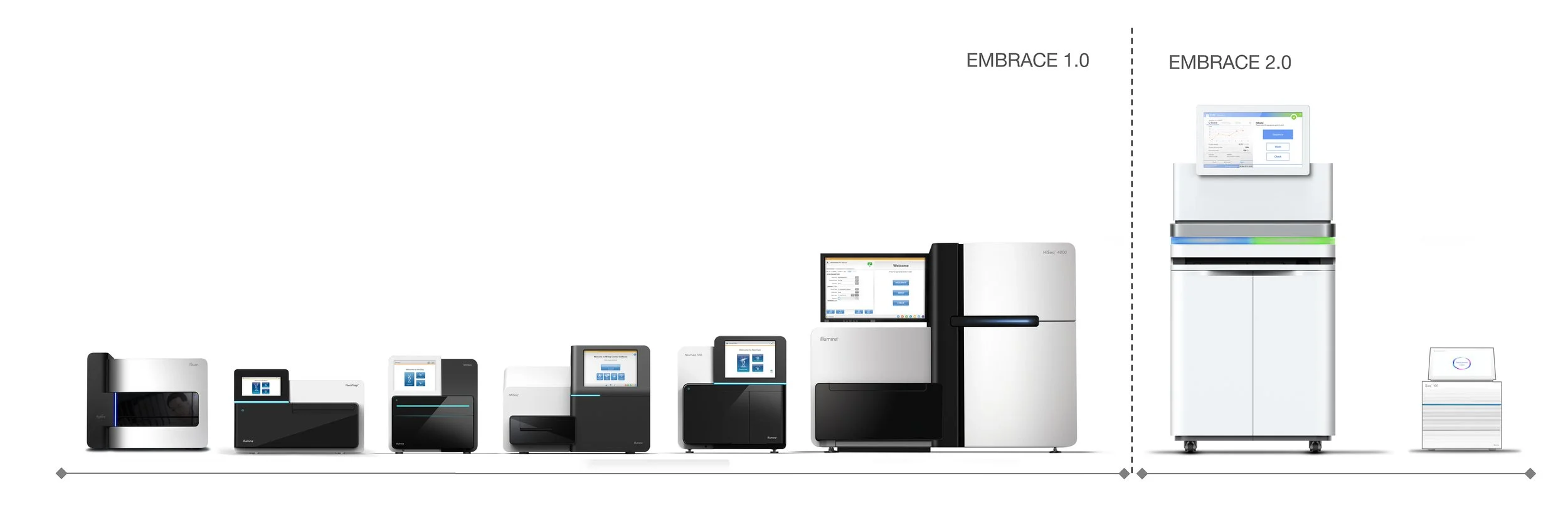
Embrace 2.0 evolved from interlocking primary elements to a horizontally stacked layout, introducing a focal horizontal band—differentiated by material or pattern—to highlight key interaction touchpoints, supported by a wraparound light bar
SIMPLIFYING COMPLEX WORKFLOWS
Radically Improved lab tech experience
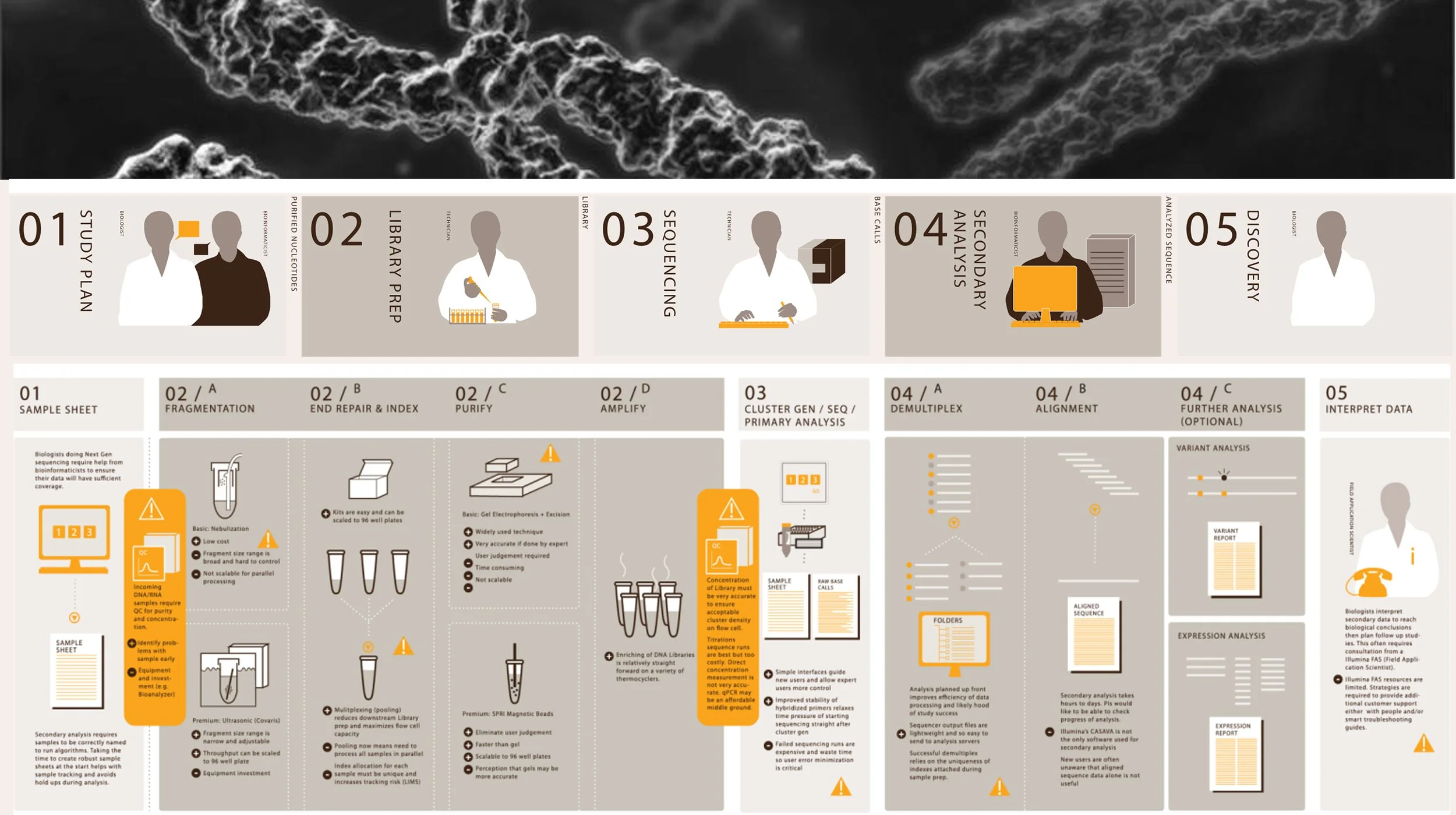
Redesigned physical and digital workflows to simplify use and increase throughput by reducing steps and errors—guided by an experience-driven analysis of every touchpoint.
Global lab research informed key interactions—from user preferences to reagent loading and system integration—enabling easier flow cell handling, a smaller bench footprint, and tool-free service access (iScan requires removing just one screw).
Understanding all users—transformed bulky, constrained layouts into intuitive, ergonomic touchpoints. Prototyped workflows and interactions on a 1:1 scale model to ease operation and reduce steps for lab operators and service technician
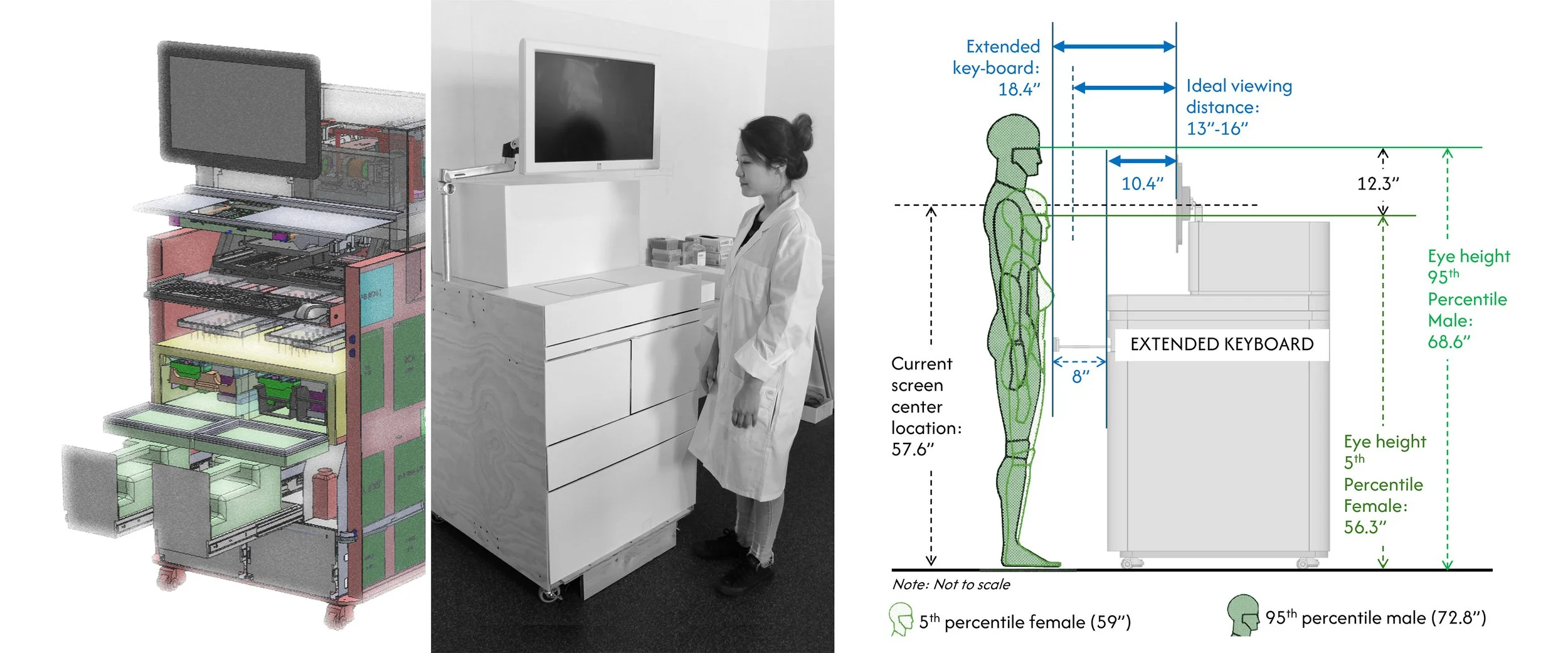
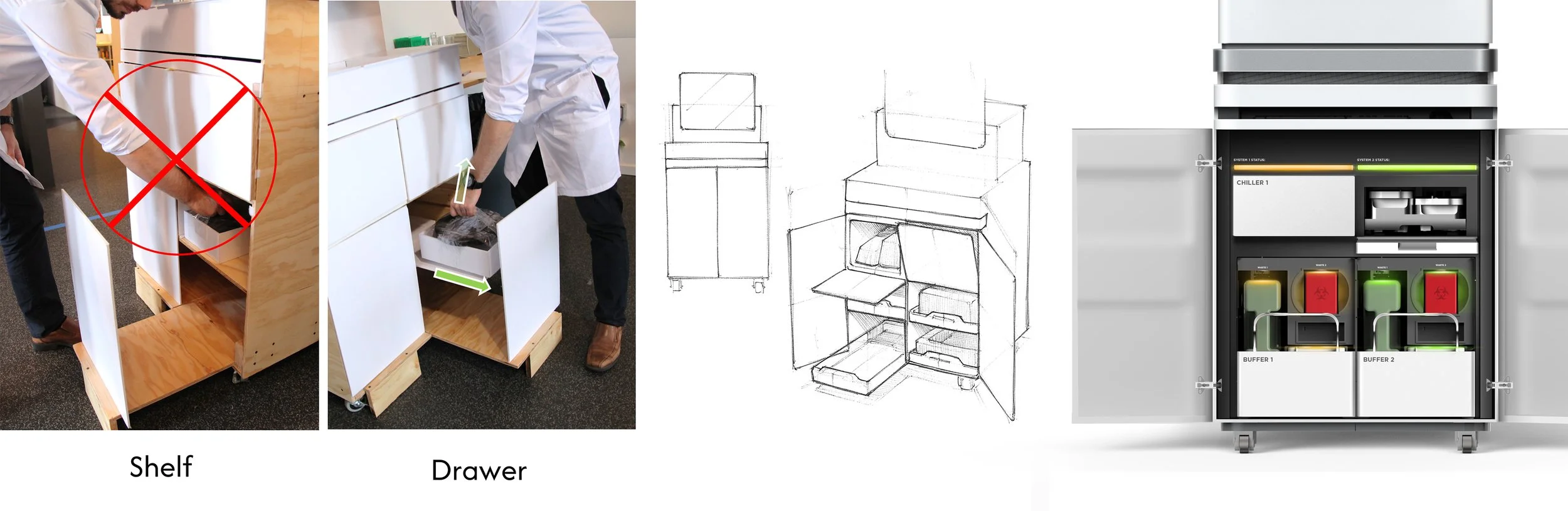
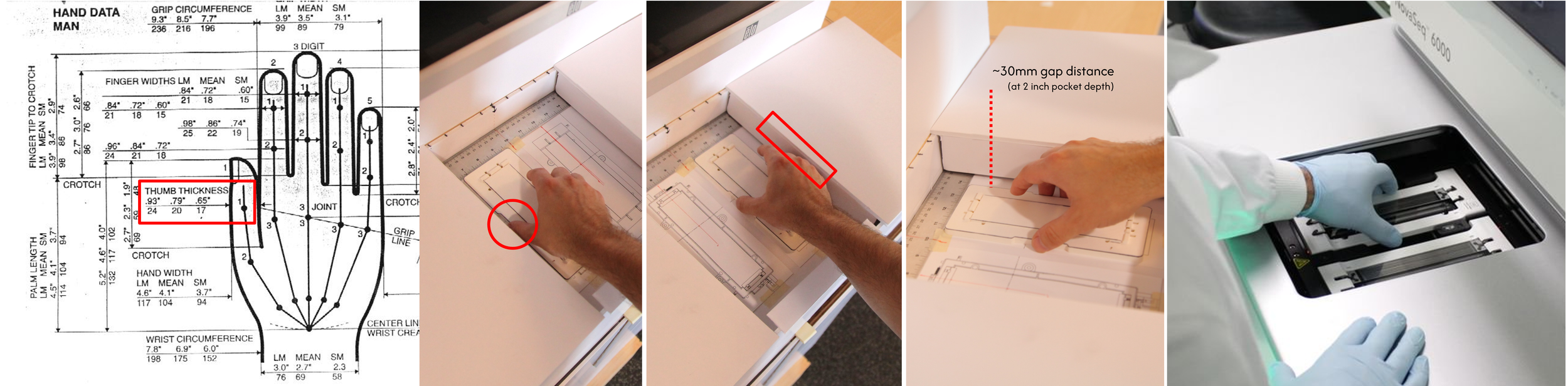
Defined ergonomic access zones for flow cell handling—ensuring comfort across user hand sizes and informing layout and spacing for safe, repeatable loading
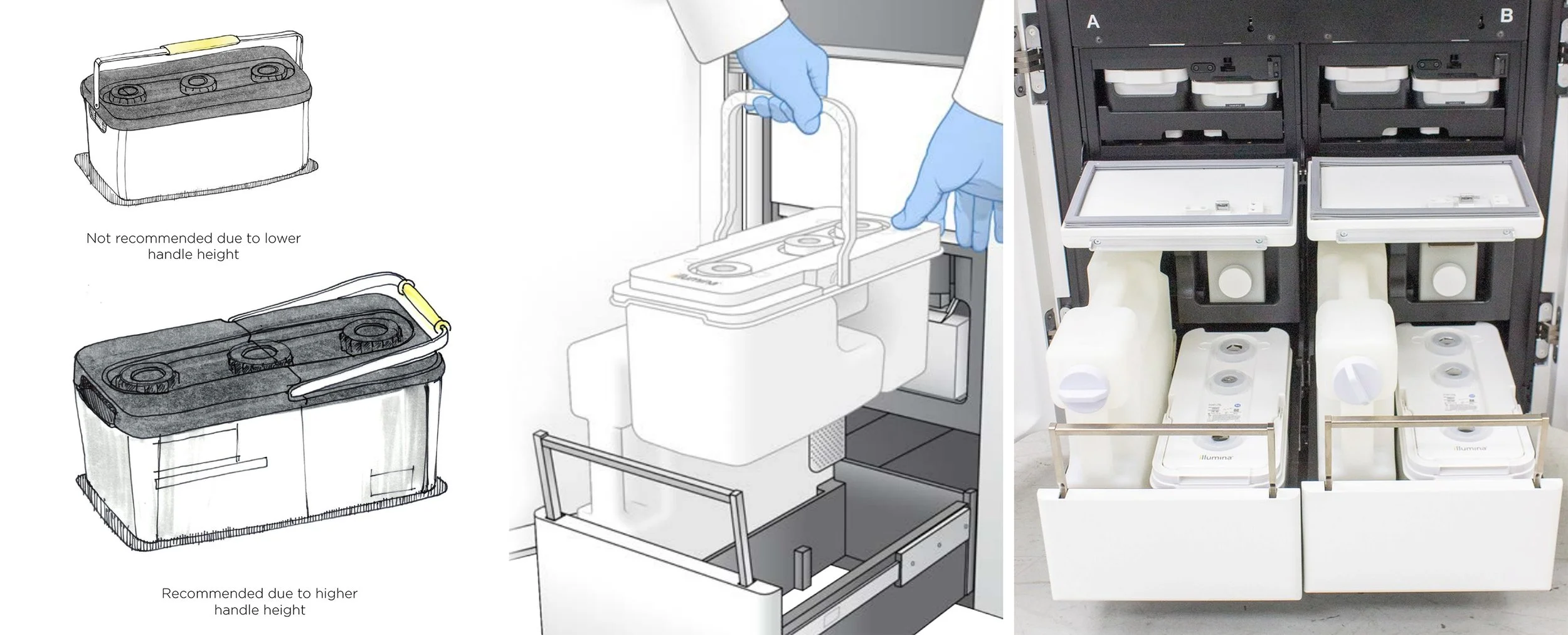
Increased handle height reduces back strain and improves ergonomics when carrying and placing the buffer container—offsetting minor handling tradeoffs
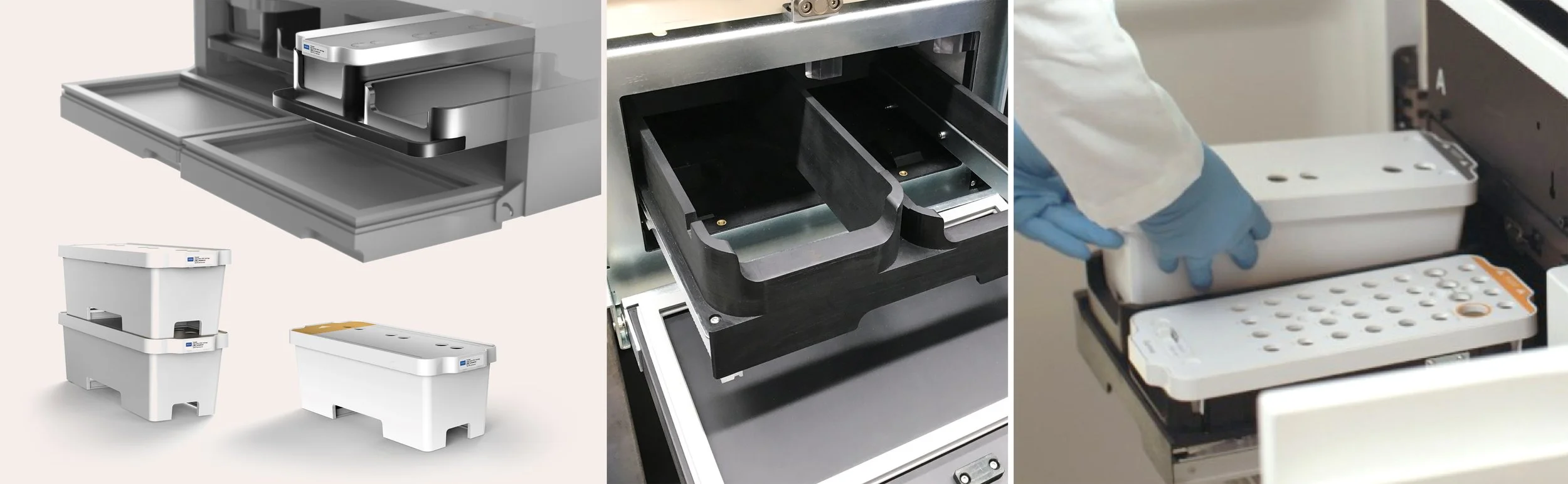
Enhanced reagent cartridge and drawer usability and aesthetics—without added cost or process changes
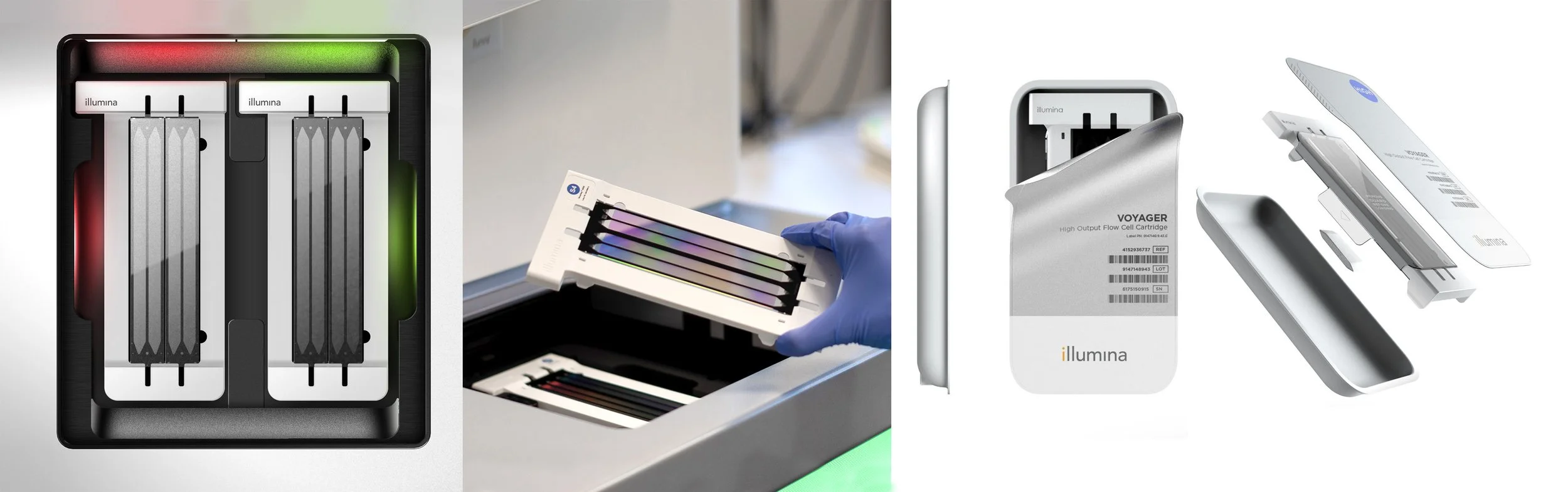
Simplified flow cell loading with integrated lighting to guide operation and distinguish between flow cell types. Packaging needed to balance premium feel, low-waste disposal, and cost efficiency to match the instrument’s elevated perception
DELIVERING DESIGN & ENGINEERING EXCELLENCE
Rapidly commercialized high-tech products
Helped bring high-tech products to market quickly by overseeing and carrying the design vision through to detailed part development—leveraging the team’s expertise in low-volume manufacturing. Kept R&D, engineering, and marketing aligned to ensure cohesive execution.
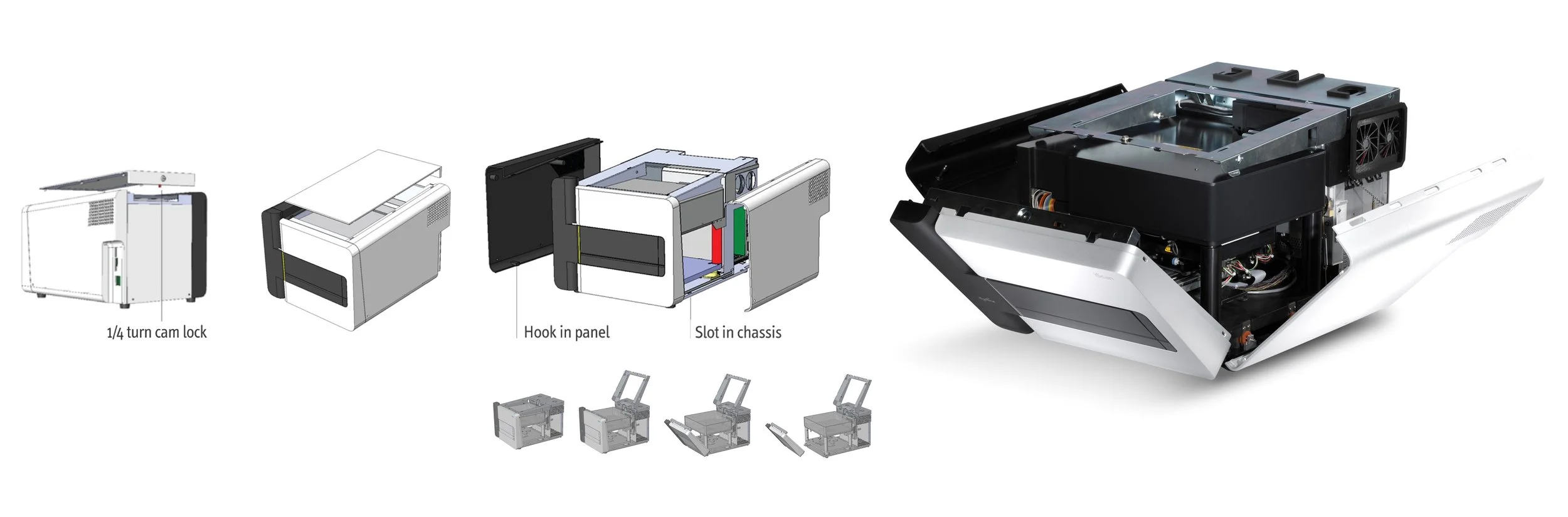
Side and front panels hook into chassis slots. Rotating a single 1/4-turn cam lock with an Allen key lets the panels swing out and pull away, providing full access to the technological core for easy servicing and reduced downtime
Applied meticulous design detailing, giving the rear of the product the same aesthetic care as the front—resulting in a tightly unified look across the instrument, reagent, and flow cell cartridges, all within the smallest possible footprint to create a true pocket sequencer
IN THE PRESS
Designing for speed when every hour counts
Streamlined workflows, intuitive interfaces, and fast part servicing enabled real-time disease surveillance in the field.

2007–2017. From Lead Designer to Senior Creative Lead, I helped shape Illumina’s visual brand identity—starting with the original iScan sequencer in 2008 and expanding it across multiple platforms, supporting the company’s rise as the most recognized name in genomic sequencing
TEAM
Creative Leadership
Lea Kobeli (Creative Project Lead) – Designed the original iScan and conceived Illumina’s visual brand identity; led the industrial design team and engineering integration for over a decade, overseeing industrial design, human factors, and visual brand language
Industrial Design
Lea Kobeli (Design and Creative Lead), Scott Janis, Eddie Licitra, Evelyne Chaubert, Alex Rochat, Yulin Ye
User research
Scott Janis, Matt Durack
Human Factors
Scott Janis, Eddie Licitra, Lea Kobeli
Mechanical Engineering, Works Like Prototyping & DFM
Matt Durack, Andrew Zee, Lucas Menanix, Elizabeth Marshman, Jon Tackie, Jeff Servaites, Wenson Chern, Dan Kennedy
Project Management
Matt Durack, Vijay Sekaran, Ken Wood
Business Development
Jeff Salazar, Robert Howard, and Jeff Smith
CREDITS
Designed by Lunar and McKinsey Design
Media Credits Lunar / McKinsey Design, Illumina
AWARDS

GOOD DESIGN Award
For Illumina iScan system
This project is presented for portfolio purposes only and is not affiliated with or endorsed by any company. All rights reserved.


Back to Overview

Next: Radiotherapy redefined